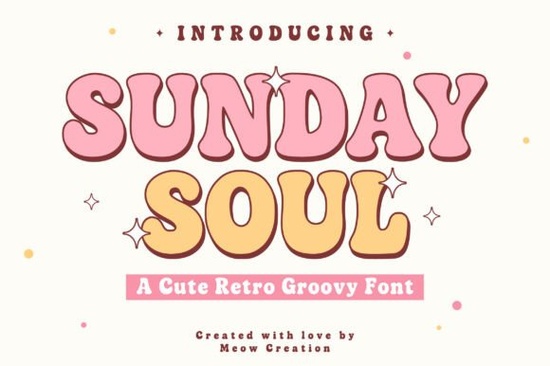
If you need a typeface that wraps warmth and playfulness around every word, Sunday Soul Font delivers that exact feeling. It’s a retro, groovy bubble font with bold curves and soft rounded edges that echo the carefree vibe of the 70s. Designers, crafters, and small business owners often reach for it when a project calls for something friendly, nostalgic, and a little bit funky without feeling dated.
Who should use a retro bubble font like Sunday Soul?
This font isn’t reserved for one niche. Print-on-demand sellers layer it onto t‑shirts, tote bags, and mugs to create designs that sell fast in casual lifestyle collections. Crafters use it for greeting cards, scrapbook titles, and vinyl decals because the thick, rounded letterforms cut cleanly and stay legible even at smaller home‑printer sizes. Small businesses can bring a warm, approachable personality to logos, window signage, and social media graphics. If your audience responds to down‑to‑earth, cheerful visuals, a display font like this makes an immediate impression.
How does Sunday Soul Font handle real design projects?
The puffiness of the characters makes short phrases pop. Try it on:
- Vintage‑inspired posters – headline quotes with a psychedelic color palette.
- Funky t‑shirts – single‑word statements or brand names that need big, bubbly presence.
- Stickers and labels – the smooth edges keep the shape punchy even when scaled down.
- Logos and wordmarks – combine with a simple sans‑serif subtitle for a balanced retro‑modern lockup.
- Social media quote cards – the soulful bounce adds personality without distracting from the message.
Because Sunday Soul is a display face, it shines in larger sizes where the curves feel deliberate. Use it for headlines, pull quotes, or merchandise covers, and pair it with a neutral body typeface for any secondary text.
How does this font compare to other display typefaces?
Every project has a different mood. While Sunday Soul leans into soft, groovy puffiness, sometimes you need a grittier texture. A dusty cowboy font introduces raw western energy ideal for rodeo posters or rugged outdoor branding. If you want more stacked, psychedelic typography from the same decade, a stacked wave display ramps up the trippy factor. For messy, hand‑lettered journaling, something like a rough handwritten script gives a completely different organic feel. Sports‑inspired merch often calls for bold varsity lettering, where crisp corners replace rounded bubbles. And when you need a pixel‑glitched, ransom‑note aesthetic, a ransom pixel font pulls you into retro gaming territory. Understanding what role each style plays helps you pick the right tool for the right audience.
What are the best color palettes to pair with a 70s inspired font?
Sunday Soul’s bold shape holds its own against both earthy vintage tones and modern pastels. Classic 70s combinations like avocado green, mustard yellow, burnt orange, and warm brown reinforce the nostalgic feel. Pair those with a cream or off‑white background for an authentic sticker‑pack look. If you’re aiming for a softer, contemporary twist, try dusty rose, mint, buttercream, and terracotta. Because the letterforms are so thick, a single‑color treatment often works best adding a subtle outline or a drop shadow can help the words stand out on busy product mockups.
Are bubble fonts readable for body text?
Display fonts like Sunday Soul are built for impact, not long reading. The generous bowls and tight spacing that make headlines look bouncy can feel heavy in paragraphs. Stick to short text blocks a product name, a catchy tagline, a three‑word mantra. If you need to include a few sentences (like a sticker disclaimer or a short event description), bump up the size and add generous line spacing. For anything longer, switch to a clean, open‑counter sans‑serif to keep the overall design easy on the eyes.
How do I access and use Sunday Soul Font in my software?
Once you grab Sunday Soul Font from Creative Fabrica, the download typically includes .otf and .ttf files. Install them on your computer and they’ll appear in any program that reads system fonts Photoshop, Illustrator, Cricut Design Space, Canva Pro, and even free alternatives like Inkscape. On most print‑on‑demand platforms you can upload the font directly if the platform allows custom fonts. Start by typing your phrase in uppercase for maximum bubble impact; the rounded forms often look especially charming when all‑caps is used, but mixed case keeps a friendlier, more handwritten tone.
Quick checklist for your next groovy design:
- Choose a short phrase or single word the font does the heavy lifting.
- Pick a color palette that matches your product’s vibe (earthy 70s or soft modern).
- Set the text large and leave breathing room around it; don’t crowd the bubbles.
- Pair with a simple sans‑serif for any supporting text like dates or shop names.
- Test on a mockup of your final product if it’s a t‑shirt, check how the curves warp on fabric.
- Save a transparent PNG version for stickers or simple overlays, and keep the original editable file for future tweaks.
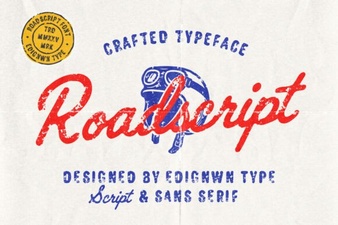 Roadscript Font: Unleash Creativity in Your Typography
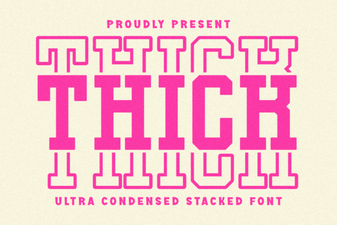 Bold Typography: Thick Stacked Fonts for Impact
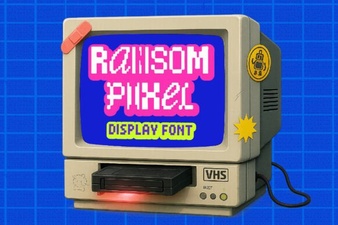 Ransom Pixel Font: Design Inspiration & Project Ideas
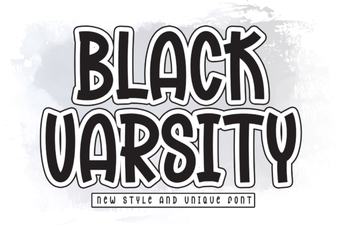 Bold Black Varsity Font Styles for Your Next Design
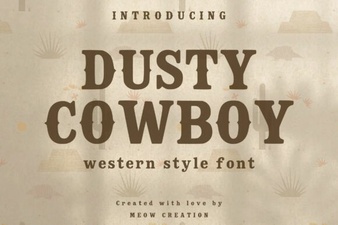 Dusty Cowboy Font: Western Typography for Creative Projects
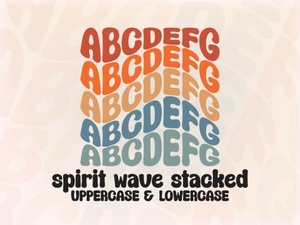 Spiritwavestacked Font: Inspiration for Bold Designs