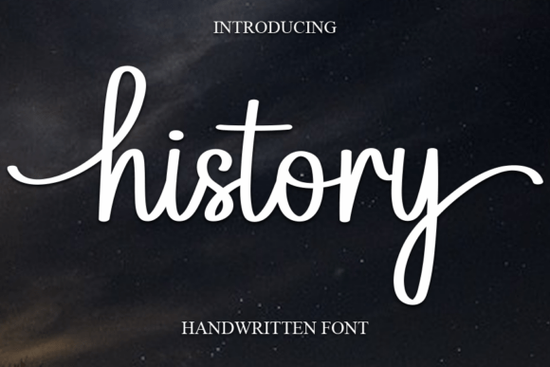
If you’re looking for a handwriting font that feels warm, personal, and lightly elegant without becoming too formal, History Font is one worth trying. This sweet cursive script brings a gentle flow that sits right between fancy and casual, so it fits a surprising range of creative work from branding and wedding stationery to simple greeting cards and everyday craft projects.
What does the History script actually look like?
The style is a modern handwritten cursive with soft, rounded strokes and a slightly bouncy baseline. Letters connect naturally but don’t feel forced, which gives it a relaxed, romantic feel. The line weight is fairly even, so text stays clear even when you size it up. You’ll notice that descenders like “g” and “y” have a gentle swoop, and capital letters carry just enough flourish to feel decorative without distracting from the word. It’s the kind of script font that whispers “joyful” rather than shouting it.
Which projects suit History Font best?
Because the font balances sweetness with legibility, it slides comfortably into many design situations. Here are some of the most common ways crafters, print-on-demand sellers, and small business owners can use it:
- Branding and logos: Boutique shops, bakeries, florists, and handmade product lines can use History Font for a signature, approachable look.
- Wedding and event stationery: Invitations, save‑the‑dates, place cards, and thank‑you notes get an instant romantic layer.
- Greeting cards and gift tags: The personal, handwritten character makes even a printed card feel like a note from a friend.
- Fashion and lookbook design: Use it for taglines, quotes, or fabric labels where you want a soft, feminine touch.
- Social media and marketing: Highlight quotes, promotions, or everyday affirmations with a script that feels real and unpolished.
- Print-on-demand products: T-shirts, mugs, tote bags, and phone cases all look more curated when you use a gentle cursive font for short phrases or single words.
How does History Font compare to other script fonts on Creative Fabrica?
Every designer builds a folder of go‑to scripts, and it helps to know how History fits into that toolkit. If you’re after a similar sweet handwritten vibe but need a little more bounce and energy, a lively script like Dancing brings a playful hand‑lettered rhythm that works beautifully for children’s projects and upbeat branding. For a weekend‑ready, easygoing cursive, Saturday feels as relaxed as a coffee‑shop chalkboard. When your project leans into a preppy, cute aesthetic think stationery, planner stickers, or teen lifestyle designs a budget‑friendly option like Preppy Cute adds just the right amount of cheer. If you need more delicate, ultra‑feminine loops for wedding details or beauty branding, the fine swirls of Kimily can soften your layout even further. And for those rare times when you want a hand‑drawn, lined look with a bit of quirkiness, Salty Dish Line gives you a sketchy script that still feels polished enough for short headings.
History sits somewhere in the middle of this group more composed than a fully playful font, yet warmer than a sleek traditional script. That middle ground makes it surprisingly versatile for both personal and commercial work.
Is History Font easy to read for longer text?
Like most handwritten scripts, History is strongest in short runs. A sentence, a tagline, or a single word feels natural and inviting, but full paragraphs can tire the eye because the connected letters create a tighter rhythm. Reserve it for headlines, names, quotes, and call‑to‑action text. Pair it with a clean sans‑serif for body copy, and you’ll keep the elegant mood while respecting readability.
How do print‑on‑demand sellers use fonts like History?
If you run a small POD shop, the font’s realism helps products feel custom‑made. I’ve tested it on mockups for tote bags and crewneck sweatshirts, and the cursive holds up well at around 48 pt and above. Thinner strokes might disappear on very textured fabrics, so give the design a quick test print whenever possible. Also, keep the phrase short first names, simple mantras, or a single date look best. A phrase like “hello beautiful” or “she believed she could” lands perfectly without overcrowding the surface.
What file formats come with History Font?
Like most Creative Fabrica fonts, History Font typically includes standard OTF and TTF files, which work on both Windows and macOS. The OTF format can handle large character sets and advanced ligatures if the designer included them. You can use the font in any software that supports system fonts Photoshop, Illustrator, Canva, Cricut Design Space, Silhouette Studio, and even basic word processors. Always check the individual product page for the exact package contents before you buy.
What should you check before adding History to a client or shop project?
Here’s a quick practical checklist to keep your workflow smooth:
- Test the font at the exact size you’ll print or display to confirm the thin joins stay visible.
- Pair History with a neutral sans‑serif or a simple serif for body text contrast makes both scripts and paragraphs shine.
- If you plan to sell physical products, review the font’s license. Most Creative Fabrica fonts include a commercial license, but always check if additional embedding or print‑on‑demand terms apply.
- Try adding a slight letter spacing in your design software to give the cursive a more airy, high‑end look without hurting the connection between letters.
- Experiment with color: History feels at home in soft pastels, but it can also surprise you in warm ochre or charcoal on off‑white backgrounds.
Once you land on a combination that feels like your brand’s voice, save a style guide note so you can repeat the magic quickly next time.
Get Started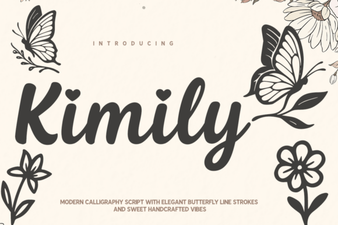 Kimily Font: Creative Typography for Modern Design Projects
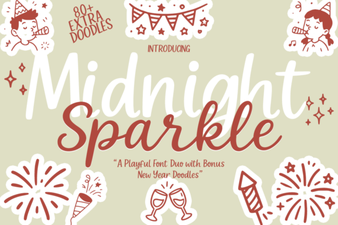 Midnight Sparkle Duo Font: Description & Design Ideas
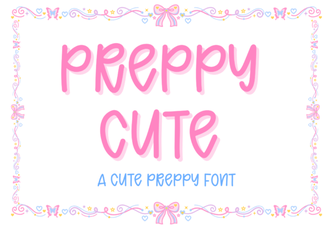 Charming Preppy Cute Fonts for Stylish Designs
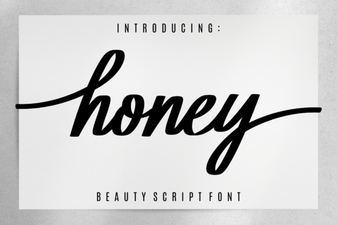 Honey Font Inspiration: Sweet Typography & Design Projects
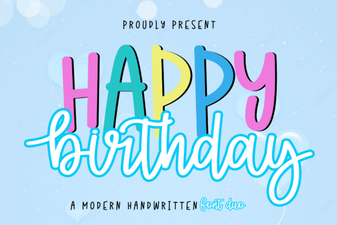 Happy Birthday Duo Font: Creative Design Ideas & Uses
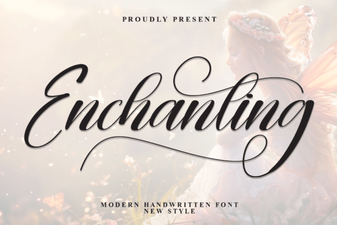 Enchanting Fonts: Add Magic to Your Typography